
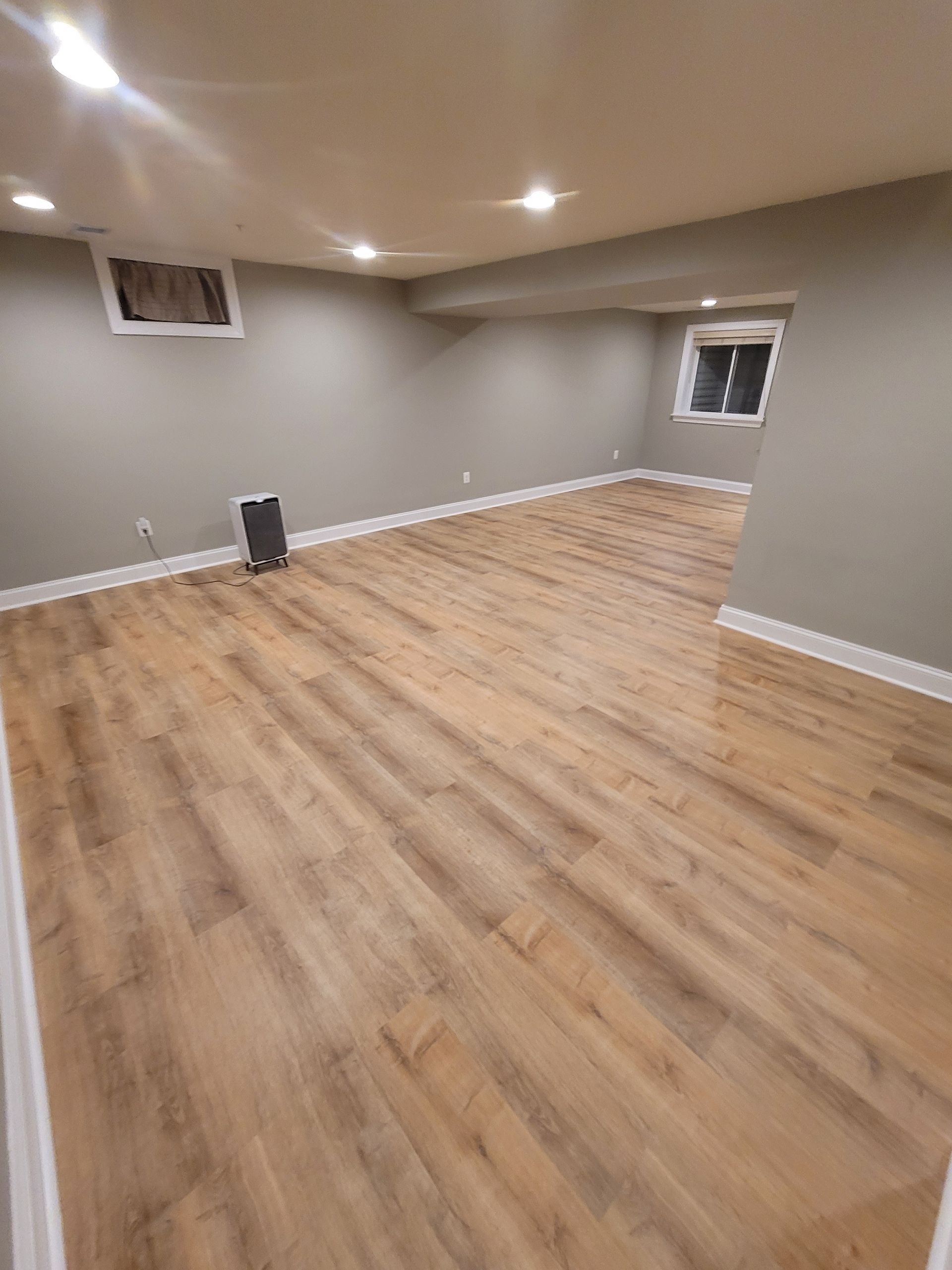
Flooring that Last starts with Professional Installation!
Engineered hardwood flooring for homes where solid wood warps or fails from moisture and temperature shifts.
Floor and Wall Guys Inc installs engineered hardwood flooring for homeowners who want the look of solid wood without the structural failures that come from humidity swings and subfloor movement. You get planks that stay flat in basements, kitchens, and spaces where solid hardwood would buckle or gap within a year. This service is for you if your home has uneven moisture levels or if you've replaced warped floors before and need a material that resists the same conditions.
Engineered hardwood uses a plywood core topped with a real wood veneer, which means the plank expands and contracts less than solid lumber while still showing natural grain and color variation. The cross-layered construction holds its shape over concrete slabs, radiant heat systems, and grade-level installations where solid wood would crack or cup. You choose from plank widths, stain colors, and finish types that match your trim and cabinetry, and the material arrives pre-finished so there is no sanding dust or drying time after installation.
Call to discuss your subfloor type and the finish options that work with your existing trim and lighting.
Why Engineered Planks Outperform Solid Lumber
The installation starts with checking your subfloor for levelness and moisture content using a digital meter, because engineered hardwood performs best when the slab or underlayment stays within manufacturer tolerances. Floor and Wall Guys Inc removes baseboards, measures the room for plank layout, and cuts planks to stagger seams so no two joints line up closer than six inches. The planks lock together with tongue-and-groove edges or glue down directly depending on your subfloor material and whether you have radiant heat running underneath.
After the floor is installed, you will see planks that sit flush without lippage, seams that align tightly, and a surface that reflects light evenly because the factory finish is applied in controlled conditions rather than on site. The floor feels solid underfoot and produces less hollow noise than floating laminate because the plywood core adds mass and the glue-down method eliminates air gaps.
The veneer thickness determines how many times you can refinish the floor in the future, typically one to two sandings for three-millimeter wear layers. If your room has permanent moisture sources like exterior doors or appliances, the team adds expansion gaps around the perimeter and uses moisture barriers under the planks to prevent swelling at the edges.
Questions About Engineered Hardwood Installation
These are the questions homeowners ask when they are comparing engineered hardwood to solid wood or laminate and need to know how the material will perform in their specific rooms.
What makes engineered hardwood more stable than solid wood?
The plywood core is made from layers glued in alternating grain directions, which counteracts the natural expansion and contraction that makes solid wood warp when humidity changes. You get a plank that stays flat in conditions where solid lumber would cup or crown.
How thick does the veneer need to be for refinishing?
A three-millimeter wear layer allows for one or two refinishing cycles, while two-millimeter veneers are typically considered non-refinishable because sanding through to the core weakens the plank. Floor and Wall Guys Inc recommends thicker veneers if you plan to stay in the home long term and want the option to change the stain color later.
Can engineered hardwood go over concrete slabs?
Yes, as long as the slab is level within an eighth of an inch over ten feet and the moisture vapor emission stays below the manufacturer limit, usually three pounds per thousand square feet. A moisture barrier or underlayment with a built-in vapor block goes down first to prevent water from migrating up into the planks.
Why does engineered hardwood cost less to install than solid wood?
You skip the sanding and finishing steps because the planks arrive with factory-applied urethane or oil coatings that cure before they reach your home. Labor time drops by half and there is no finish odor or drying period, so you can walk on the floor the same day.
What happens if a plank gets damaged after installation?
Individual planks can be replaced if they are glued down by cutting out the damaged section and gluing in a new piece, though the process requires matching the grain and finish. Floating installations allow easier plank removal by disassembling from the nearest wall, but this only works if you saved extra material from the original batch.
Floor and Wall Guys Inc measures your rooms, tests your subfloor, and orders planks that match your trim and furniture so the installation goes in without delays or mismatched grain. Reach out to schedule a site visit and get a material estimate based on your square footage and finish preference.